Pokémon TCG Pocket Wiki
Everything about how Pokémon TCG Pocket actually works — rules, gacha systems, and the free-to-play economy, explained with real math and no guesswork.
Basics
7 articles How to Play Pokémon TCG Pocket: Rules, Points, and Deck Basics
The core rules of Pokémon TCG Pocket: the 3-point win condition, Energy Zone instead of Energy cards, and how to build a legal 20-card deck.
How to Play Pokémon TCG Pocket: Rules, Points, and Deck Basics
The core rules of Pokémon TCG Pocket: the 3-point win condition, Energy Zone instead of Energy cards, and how to build a legal 20-card deck.
 Pokémon TCG Pocket Beginner's Guide: Your First Week Done Right
What to open, what to save, and how to build your first deck in Pokémon TCG Pocket without wasting your early Pack Points.
Pokémon TCG Pocket Beginner's Guide: Your First Week Done Right
What to open, what to save, and how to build your first deck in Pokémon TCG Pocket without wasting your early Pack Points.
 Pokémon TCG Pocket Reroll Guide: What the Real Odds Say
Is rerolling for a strong start worth it in Pokémon TCG Pocket? The real per-slot pull rates and cumulative odds, so you decide with numbers instead of guesswork.
Pokémon TCG Pocket Reroll Guide: What the Real Odds Say
Is rerolling for a strong start worth it in Pokémon TCG Pocket? The real per-slot pull rates and cumulative odds, so you decide with numbers instead of guesswork.
 Deck Building Basics in Pokémon TCG Pocket: The 20-Card Backbone
How to structure a legal 20-card Pokémon TCG Pocket deck — Basic-to-evolution ratio, the energy curve by evolution stage, and why the no-Energy-card rule changes everything.
Deck Building Basics in Pokémon TCG Pocket: The 20-Card Backbone
How to structure a legal 20-card Pokémon TCG Pocket deck — Basic-to-evolution ratio, the energy curve by evolution stage, and why the no-Energy-card rule changes everything.
 Energy Zone Explained: How Power Works Without Energy Cards
Pokémon TCG Pocket has no Energy cards in the deck — the Energy Zone generates power automatically. Here's exactly how it works and what it means for deck building.
Energy Zone Explained: How Power Works Without Energy Cards
Pokémon TCG Pocket has no Energy cards in the deck — the Energy Zone generates power automatically. Here's exactly how it works and what it means for deck building.
 Pokémon TCG Pocket Type Matchups: Weakness Chart From Real Card Data
Which type beats which in Pokémon TCG Pocket, calculated directly from our own database of every printed Pokémon card instead of assumed from the mainline games.
Pokémon TCG Pocket Type Matchups: Weakness Chart From Real Card Data
Which type beats which in Pokémon TCG Pocket, calculated directly from our own database of every printed Pokémon card instead of assumed from the mainline games.
 Pokémon ex Cards in TCG Pocket: The 2-Point Tradeoff Explained
What makes a Pokémon ex card different in Pokémon TCG Pocket, with real HP data across every ex card and the 2-point knockout cost you're trading it for.
Pokémon ex Cards in TCG Pocket: The 2-Point Tradeoff Explained
What makes a Pokémon ex card different in Pokémon TCG Pocket, with real HP data across every ex card and the 2-point knockout cost you're trading it for.
Game Systems
13 articles
Wonder Pick Odds Explained: Why It's Really 20%, Not a Pattern
Wonder Pick gives every one of 5 face-down cards an equal 20% chance. See the real math, including why 3 attempts is 48.8%, not 60%.
 Pack Points Guide: When to Grind Instead of Gamble
Every pack banks 5 Pack Points toward a guaranteed card redemption. Full exchange table plus the math on when cashing in beats pulling.
Pack Points Guide: When to Grind Instead of Gamble
Every pack banks 5 Pack Points toward a guaranteed card redemption. Full exchange table plus the math on when cashing in beats pulling.
 Pokémon TCG Pocket Trading: Stamina, Shinedust Costs, and What's Off-Limits
Trade Stamina refills once a day, Shinedust replaced Trade Tokens, and two rarities can never be traded. Full cost table inside.
Pokémon TCG Pocket Trading: Stamina, Shinedust Costs, and What's Off-Limits
Trade Stamina refills once a day, Shinedust replaced Trade Tokens, and two rarities can never be traded. Full cost table inside.
 Pokémon TCG Pocket Rarity Guide: All 11 Tiers and Real Pull Rates
All 11 Pokémon TCG Pocket rarities explained, plus the exact per-slot pull percentages and the 0.05% God Pack chance.
Pokémon TCG Pocket Rarity Guide: All 11 Tiers and Real Pull Rates
All 11 Pokémon TCG Pocket rarities explained, plus the exact per-slot pull percentages and the 0.05% God Pack chance.
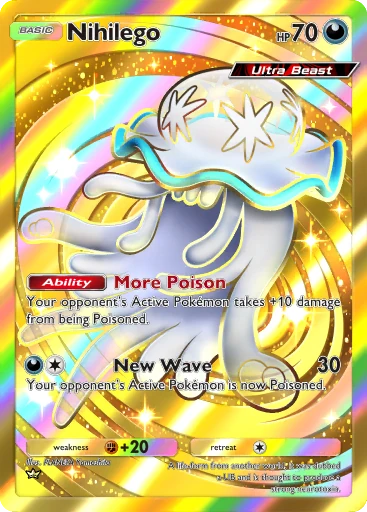 God Pack (Rare Pack) Odds in Pokémon TCG Pocket: The Real Math
How rare is a God Pack in Pokémon TCG Pocket, what's actually inside one, and how many packs you'd need to open before the odds favor you seeing one.
God Pack (Rare Pack) Odds in Pokémon TCG Pocket: The Real Math
How rare is a God Pack in Pokémon TCG Pocket, what's actually inside one, and how many packs you'd need to open before the odds favor you seeing one.
 Shinedust in Pokémon TCG Pocket: Where It Comes From and What to Save It For
Shinedust is the currency behind every trade in Pokémon TCG Pocket. Here's where it comes from, the full price table by rarity, and how to spend it without wasting it on the wrong card.
Shinedust in Pokémon TCG Pocket: Where It Comes From and What to Save It For
Shinedust is the currency behind every trade in Pokémon TCG Pocket. Here's where it comes from, the full price table by rarity, and how to spend it without wasting it on the wrong card.
 Pack, Wonder, and Trade Hourglass: Which One to Spend First
The three Hourglass items in Pokémon TCG Pocket each speed up a different timer. Here's exactly what each one does and how to prioritize spending them.
Pack, Wonder, and Trade Hourglass: Which One to Spend First
The three Hourglass items in Pokémon TCG Pocket each speed up a different timer. Here's exactly what each one does and how to prioritize spending them.
 Solo Battles in Pokémon TCG Pocket: What They're For
Solo Battles pit you against AI opponents in Pokémon TCG Pocket. Here's what they're actually good for, from practice to event-exclusive promo packs.
Solo Battles in Pokémon TCG Pocket: What They're For
Solo Battles pit you against AI opponents in Pokémon TCG Pocket. Here's what they're actually good for, from practice to event-exclusive promo packs.
 Missions and Achievements in Pokémon TCG Pocket: Your Biggest Free Resource
How Missions and Achievements quietly fund a Pokémon TCG Pocket account without a single real-money purchase, and why they're the mechanic that hands out Promo cards you can't get any other way.
Missions and Achievements in Pokémon TCG Pocket: Your Biggest Free Resource
How Missions and Achievements quietly fund a Pokémon TCG Pocket account without a single real-money purchase, and why they're the mechanic that hands out Promo cards you can't get any other way.
 Promo Cards (P-A / P-B) in Pokémon TCG Pocket: Where They Come From and Why They're Different
Promo cards in Pokémon TCG Pocket don't come from packs and can't be traded. Here's the real card counts by set, the rarity breakdown, and how they're actually obtained.
Promo Cards (P-A / P-B) in Pokémon TCG Pocket: Where They Come From and Why They're Different
Promo cards in Pokémon TCG Pocket don't come from packs and can't be traded. Here's the real card counts by set, the rarity breakdown, and how they're actually obtained.
 Status Conditions in Pokémon TCG Pocket: Effects, Cures & Stacking
All 5 special conditions explained: exact damage per turn, coin-flip odds, what cures each one, and which conditions can stack on the same Pokémon.
Status Conditions in Pokémon TCG Pocket: Effects, Cures & Stacking
All 5 special conditions explained: exact damage per turn, coin-flip odds, what cures each one, and which conditions can stack on the same Pokémon.
 Going First or Second in Pokémon TCG Pocket: Which Is Better
A coin flip decides it, and going second gets a real edge — the exact rule the first player is missing on turn 1, and when going first wins anyway.
Going First or Second in Pokémon TCG Pocket: Which Is Better
A coin flip decides it, and going second gets a real edge — the exact rule the first player is missing on turn 1, and when going first wins anyway.
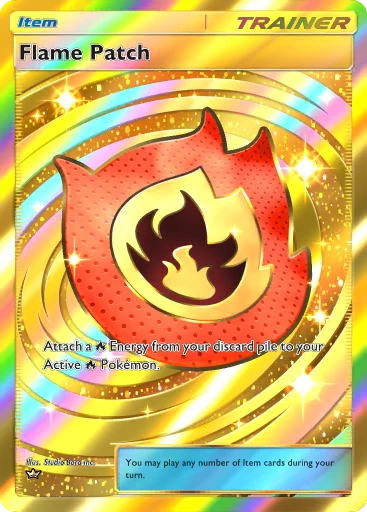 Expert Battle in Pokémon TCG Pocket: How the Hardest Mode Works
Expert Battle is the top solo-battle tier, unlocked per set with themed rival decks and type-restricted deck-building rules — the mechanic, not just a boss list.
Expert Battle in Pokémon TCG Pocket: How the Hardest Mode Works
Expert Battle is the top solo-battle tier, unlocked per set with themed rival decks and type-restricted deck-building rules — the mechanic, not just a boss list.
F2P Economy
6 articles
Pokémon TCG Pocket F2P Guide: Free Packs, Hourglasses, and Saving Smart
How far 2 free packs a day gets you, what each Hourglass buys back, and a simple no-spend saving roadmap.
Completing Your Pokémon TCG Pocket Collection: What's Actually Guaranteed and What Isn't
With 3,520 cards across 21 sets, full completion in Pokémon TCG Pocket looks impossible — until you separate the cards Pack Points can guarantee from the small handful nothing can.
Is Premium Pass Worth It in Pokémon TCG Pocket? The Math on the Extra Pack Track
Premium Pass adds a third pack track in Pokémon TCG Pocket. Here's what that actually adds up to over a month, using the same daily pack cadence covered across this wiki.
Emblems in Pokémon TCG Pocket: How the Cosmetic System Works
Emblems are the badge shown next to your name in battle — here are all 5 ways to unlock one, without needing to memorize a list that changes every set.
Deck Sleeves in Pokémon TCG Pocket: Full Cosmetic Guide
Sleeves only change how your card backs look — here's every channel to unlock one and how to assign a different sleeve to each deck.
Profile Icons in Pokémon TCG Pocket: Every Way to Unlock One
Your profile icon is the avatar shown on your card and in battle — here's how starting icons work and every channel to earn more.
Set guides
4 articles
Genetic Apex (A1) Set Guide: Pokémon TCG Pocket's Founding Set
Everything worth knowing about Genetic Apex, Pokémon TCG Pocket's original 286-card set — its 3 packs, its rarity spread, and which ex cards actually anchor the set.
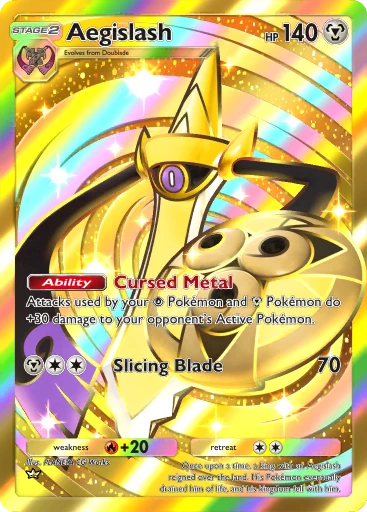 Mythical Island (A1a) Set Guide: Pocket's Single-Pack Mini Set
Mythical Island is Pokémon TCG Pocket's compact follow-up to Genetic Apex — 1 pack, 86 cards, and a Crown Rare that isn't a starter-line Pokémon.
Mythical Island (A1a) Set Guide: Pocket's Single-Pack Mini Set
Mythical Island is Pokémon TCG Pocket's compact follow-up to Genetic Apex — 1 pack, 86 cards, and a Crown Rare that isn't a starter-line Pokémon.
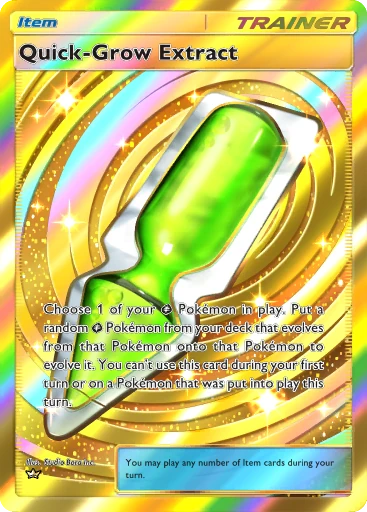 Space-Time Smackdown (A2) Set Guide: Dialga and Palkia Take the Spotlight
Space-Time Smackdown brings Pokémon TCG Pocket's second 2-pack set, anchored by Dialga ex and Palkia ex as its Crown Rare chase cards.
Space-Time Smackdown (A2) Set Guide: Dialga and Palkia Take the Spotlight
Space-Time Smackdown brings Pokémon TCG Pocket's second 2-pack set, anchored by Dialga ex and Palkia ex as its Crown Rare chase cards.
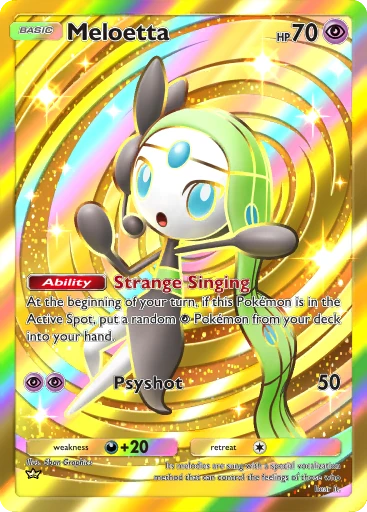 Everyday Wonders (B3b) Set Guide: The Newest Set and Its Mega Shine Twist
Everyday Wonders is Pokémon TCG Pocket's newest set: size, the B-series bonus slot, and the key cards worth chasing.
Everyday Wonders (B3b) Set Guide: The Newest Set and Its Mega Shine Twist
Everyday Wonders is Pokémon TCG Pocket's newest set: size, the B-series bonus slot, and the key cards worth chasing.
Meta & tier
1 articles
Special Conditions: Effects & Cures
Pokémon TCG Pocket features five special conditions that can affect your Active Pokémon — here's exactly what each one does and how to cure it.
Poison: deals 10 damage during each Pokémon Checkup (end of turn). Can stack with other conditions.
Burn: deals 20 damage during each Pokémon Checkup and flips a coin — heads cures the burn. Can stack with other conditions.
Sleep: can't attack or retreat. Each Pokémon Checkup, flip a coin — heads wakes the Pokémon up.
Paralysis: can't attack or retreat. Automatically cured after the Pokémon Checkup of your next turn (lasts 1 turn).
Confusion: when attacking, flip a coin — tails means the attack fails and your turn ends immediately.
Sleep, Paralysis, and Confusion don't stack — a new condition replaces the old one. Evolving or retreating a Pokémon to the bench cures all special conditions.
The Core Rules: 20-Card Decks, 3 Points, No Energy Cards
Anyone learning Pokémon TCG Pocket how to play needs 4 numbers first: 20 cards per deck, a maximum of 2 copies of any single named card, 3 points to win, and 0 Energy cards allowed in the deck itself. Energy works differently here than in the physical game: an Energy Zone attached to your side generates 1 energy automatically every turn, so you never draw or discard Energy cards at all. Points come from knockouts. Taking down a regular Pokémon awards 1 point, taking down a Pokémon ex awards 2 points, and the first player to reach 3 points wins on the spot. There are no Prize cards to collect. Card draws from your deck, including Poke Ball effects, are random and cannot be searched for a specific card by name. - Deck legality check before any match: exactly 20 cards, no more than 2 copies of one named card, zero Energy cards - Point math: 2 regular knockouts (2 points) plus 1 more knockout of any kind reaches 3 and ends the game - Running an ex-heavy deck raises your own point ceiling risk too, since your ex Pokémon also hand the opponent 2 points when knocked out Because the Energy Zone attaches 1 energy automatically every single turn with zero setup required, deck building here is entirely about the 20 non-Energy cards: Pokémon, Trainer, Item, and Supporter cards all compete for the same 20 slots that a physical Pokémon TCG deck would split between Energy and everything else. That single change is the biggest structural difference between this game and the paper card game, and it is the first thing worth internalizing before building any deck.
| Rule | Number |
|---|---|
| Cards per deck | 20 |
| Max copies of one named card | 2 |
| Points to win | 3 |
| Energy cards allowed in deck | 0 |
| Points for a regular knockout | 1 |
| Points for a Pokémon ex knockout | 2 |
Wonder Pick Is Really 20 Percent Per Card, Not a Pattern
Wonder Pick shows you 5 face-down cards pulled from a pack someone else already opened, and you choose 1. Every one of the 5 cards carries an equal 1-in-5 chance, which is 20 percent, no matter its position on screen, no matter what came up on your last few picks, and no matter the time of day you play. The pattern people think they see is a memory trick, not a game mechanic: a run of 2 unlucky picks in a row feels meaningful, but with a flat 20 percent chance per card, missing the rare slot twice in a row happens 64 percent of the time on its own. Do the reverse math and 2 separate Wonder Picks give you a 36 percent combined chance of hitting the target card at least once, purely from independent 20 percent rolls stacking, with no hidden weighting involved. - There is no cooldown, streak, or time-of-day effect on which of the 5 cards is the rare one - Card position (leftmost versus rightmost) has zero effect on the odds - If a specific rare card is what you are after, the reliable lever is how many Wonder Picks you can afford, not when or how you tap Wonder Pick spends a stamina resource that scales with what is being offered: the higher the rarest card visible among the 5 face-down options, the more stamina the pick costs, and that stamina refills on its own timer rather than on the pack-opening timer. Occasionally a Wonder Pick refresh surfaces a bonus offer that skips the stamina cost entirely, and a separate rare event card can appear that stays available only for a short window before it rotates out, so checking Wonder Pick regularly matters more than saving up picks for a single big session.
| Wonder Pick | Value |
|---|---|
| Cards shown per pick | 5 |
| Chance per card | 20% (1 in 5) |
| Missing the rare slot twice in a row | 64% |
| Hitting the target in 2 separate picks | 36% |
Pack Points and Trading: Two Safety Nets Against Bad Luck
Pack Points and trading exist for the same reason: to give you a path to a specific card that does not depend on pure luck. Every pack opened banks 5 Pack Points, redeemable on a fixed table from 35 points for a 1 Diamond card up to 2500 points for a Crown Rare. Trading works on a separate currency called Shinedust, and it has hard limits. Trade Stamina refills once per day, so trading is capped no matter how much Shinedust you have stockpiled. Shinedust costs scale by rarity: 3 Diamond costs 1200, 4 Diamond costs 5000, Art Rare (1 Star) costs 4000, Super Rare or Special Art Rare (2 Star) costs 25000, Shiny costs 10000, and Shiny Super Rare costs 30000. Immersive Rare and Crown Rare cards cannot be traded under any circumstance, and promo cards are excluded from trading entirely. - Pack Points reward volume: the more packs from one pool you open, the closer you get to a guaranteed card - Shinedust rewards duplicates: extra copies of cards you already hold convert into the currency that funds trades - The 2 systems overlap by design so a bad Wonder Pick run and a bad pack-opening run do not both leave you empty-handed The practical difference is speed versus certainty. Trading turns cards you already own in excess into a specific card you are missing almost immediately, once your Trade Stamina and Shinedust line up, while Pack Points force a slower, purely time-based path with no randomness left in it at all once you hit the threshold. Neither system replaces opening packs; they exist underneath it as a floor so that a long unlucky streak still ends in a specific card eventually, rather than never.
| Rarity | Shinedust cost |
|---|---|
| 3 Diamond | 1,200 |
| 4 Diamond | 5,000 |
| Art Rare (1 Star) | 4,000 |
| Super Rare / Special Art Rare (2 Star) | 25,000 |
| Shiny | 10,000 |
| Shiny Super Rare | 30,000 |
The F2P Time Budget: What 2 Free Packs a Day Actually Buys
The free-to-play economy runs on timers, not just luck. You get 2 free pack opens per day, with 1 pack slot refilling every 12 hours, and a 3rd daily pack slot unlocks with the Premium Pass on its own 24-hour timer. A Pack Hourglass shaves 1 hour off a refill, and Poke Gold shaves 2 hours off, both useful when you are close to a slot refilling and want it now instead of later. This timer, not raw luck, is what actually limits how fast Pack Points accumulate. At 2 packs a day, reaching the 500-point threshold for a guaranteed 4 Diamond card takes 100 packs, which is 50 days of free opens with no purchases at all, or considerably faster once the Premium Pass 3rd slot is added in. Wonder Pick and trading each run on their own separate stamina timers, so none of these 3 systems compete with each other for the same daily budget. - 2 free packs a day is the floor every player has access to, independent of spending - 100 packs from a single pool is the real cost of a guaranteed 4 Diamond redemption, translate that into days before deciding to chase it - Speed-up items only shift when a slot refills, they do not add extra slots or change any drop rate Stack the timers up and the honest read is that Pokémon TCG Pocket paces itself in days, not minutes: the 12-hour pack refill, the daily Trade Stamina reset, and the Wonder Pick stamina timer all run independently, so a player who checks in twice a day, once to spend a refilled pack slot and once to spend Trade Stamina, is already capturing close to the full daily value the free-to-play structure offers. Spending real money mainly buys back time on these same timers, through the Premium Pass 3rd pack slot or hourglass items, rather than unlocking anything a free account cannot eventually reach.
| F2P timer | Value |
|---|---|
| Free pack opens per day | 2 |
| Pack slot 1 refill | 12 hours |
| Pack slot 3 refill (Premium Pass) | 24 hours |
| Pack Hourglass saves | 1 hour |
| Poke Gold saves | 2 hours |
| Free days to reach 100 packs (500 points) | 50 days |
Frequently asked questions
Does Wonder Pick get better if I wait, reset the app, or change when I play?
No. Each of the 5 cards carries a fixed, independent 20 percent chance. Waiting, restarting, streaks, and time of day have no measurable effect on which card is the rare one.
Can I trade a Crown Rare or an Immersive Rare card?
No. Both rarities are excluded from trading entirely, regardless of how much Shinedust you have. Only cards from 1 Diamond through Shiny Super Rare are eligible for trading.
How many packs do I actually need to guarantee a Pack Points redemption?
Every pack banks 5 Pack Points, so reaching the 500-point threshold for a guaranteed 4 Diamond card takes exactly 100 packs from that one pack's pool. Points do not carry over if you switch to a different pack.